Explore Goa
Goa’s south coast is fringed by some of the region’s finest beaches, backed by a lush band of coconut plantations and green hills scattered with attractive villages. An ideal first base if you’ve just arrived in the region is Benaulim, 6km west of Goa’s second city, Margao. The most traveller-friendly resort in the area, Benaulim stands slap in the middle of a spectacular 25-kilometre stretch of pure white sand. Although increasingly carved up by Mumbai time-share companies, low-cost accommodation here is plentiful and of a consistently high standard. Nearby Colva, by contrast, has degenerated over the past decade into an insalubrious charter resort. Frequented by huge numbers of day-trippers, and boasting few discernible charms, it’s best avoided.
With the gradual spread of package tourism down the coast, Palolem, a couple of hours south of Margao along the main highway, has emerged as the budget travellers’ preferred resort, despite its relative inaccessibility. Set against a backdrop of forest-cloaked hills, its beach is spectacular, although the number of visitors can feel overwhelming in high season. For a quieter scene, try Agonda, just up the coast, or Patnem, immediately south of Palolem. Among the possible day-trips inland, a pair of elegant Portuguese-era mansions at Chandor and Quepem are your best options; and in the far south, the Cotigao Wildlife Sanctuary affords a rare glimpse of unspoilt forest and its fauna.
Read More-
Margao
Margao
The capital of prosperous Salcete taluka, MARGAO – referred to in railway timetables and on some maps by its official government title, Madgaon – is Goa’s second city, and if you’re arriving in Goa on the Konkan Railway, you’ll almost certainly have to pause here to pick up onward transport by road. The town, surrounded by fertile rice paddy and plantain groves, has always been an important agricultural market, and was once a major religious centre, with dozens of wealthy temples and dharamshalas – however, most of these were destroyed when the Portuguese absorbed the area into their Novas Conquistas (“New Conquests”) during the seventeenth century. Today, Catholic churches still outnumber Hindu shrines, but Margao has retained a cosmopolitan feel due to a huge influx of migrant labour from neighbouring Karnataka and Maharashtra.
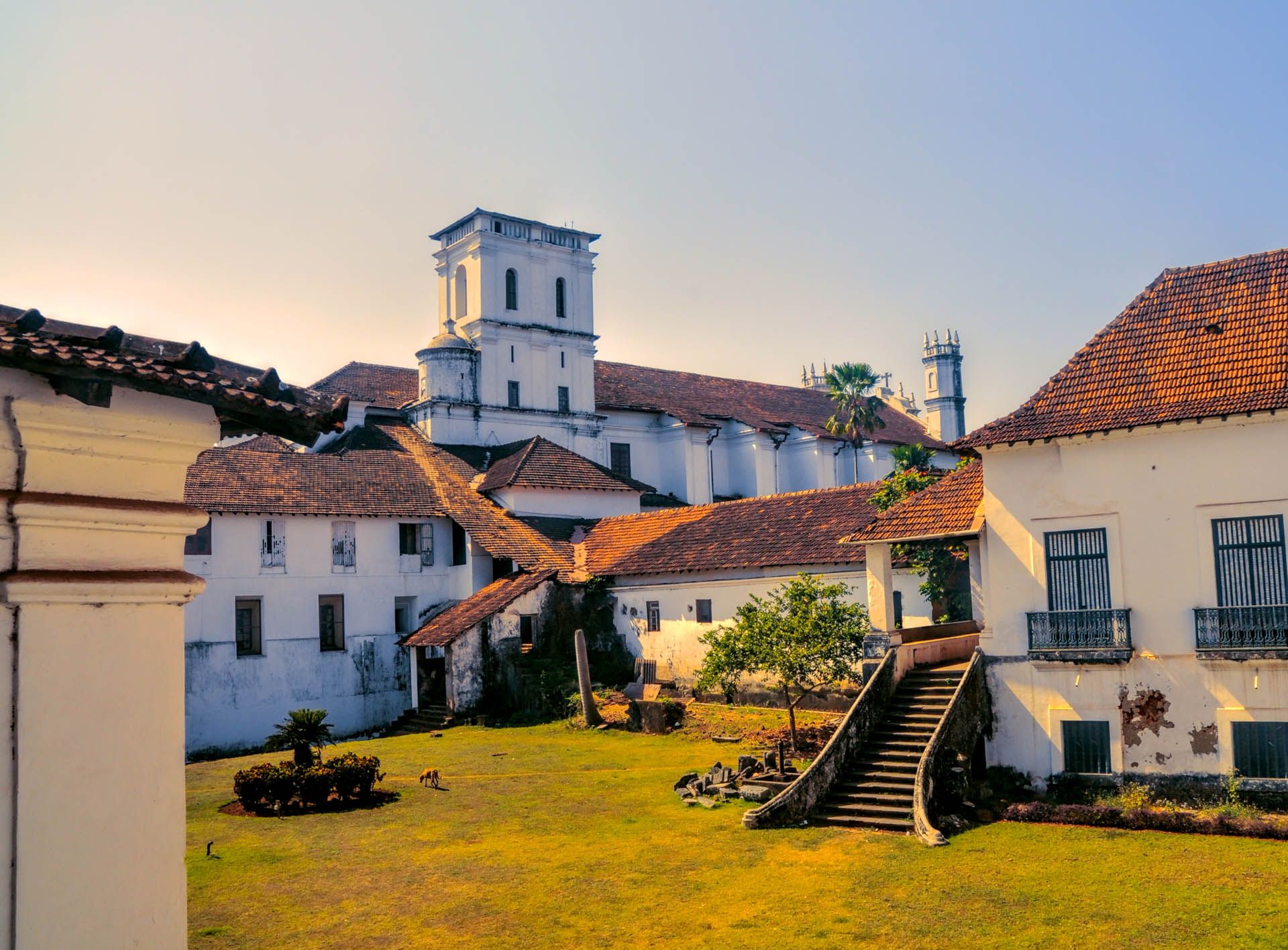
The Church of the Holy Spirit is the main landmark in Margoa’s dishevelled colonial enclave, next to Largo de Igreja square. Built by the Portuguese in 1675, it ranks among the finest examples of late-Baroque architecture in Goa, its interior dominated by a huge gilt reredos dedicated to the Virgin. Just northeast of it, overlooking the main Ponda road, stands one of the state’s grandest eighteenth-century palacios, Sat Banzam Ghor (“Seven Gables house”). Only three of its original seven high-pitched roof gables remain, but the mansion is still an impressive sight, its facade decorated with fancy scroll work and huge oyster-shell windows.
For more of Goa’s wonderful vernacular colonial architecture, you’ll have to head inland from Margao, where villages such as Loutolim, Racaim and Rachol are littered with decaying old Portuguese houses, most of them empty – the region’s traditional inheritance laws ensure that old family homes tend to be owned by literally dozens of descendants, none of whom are willing or can afford to maintain them.
Another reason to come here is to shop at the town’s market, whose hub is a labyrinthine covered area. Also worth checking is the little government-run Khadi Gramodyog shop, on the main square, which sells the usual range of hand-spun cottons and raw silk by the metre, as well as ready-made traditional Indian garments.
-
Quepem
Quepem
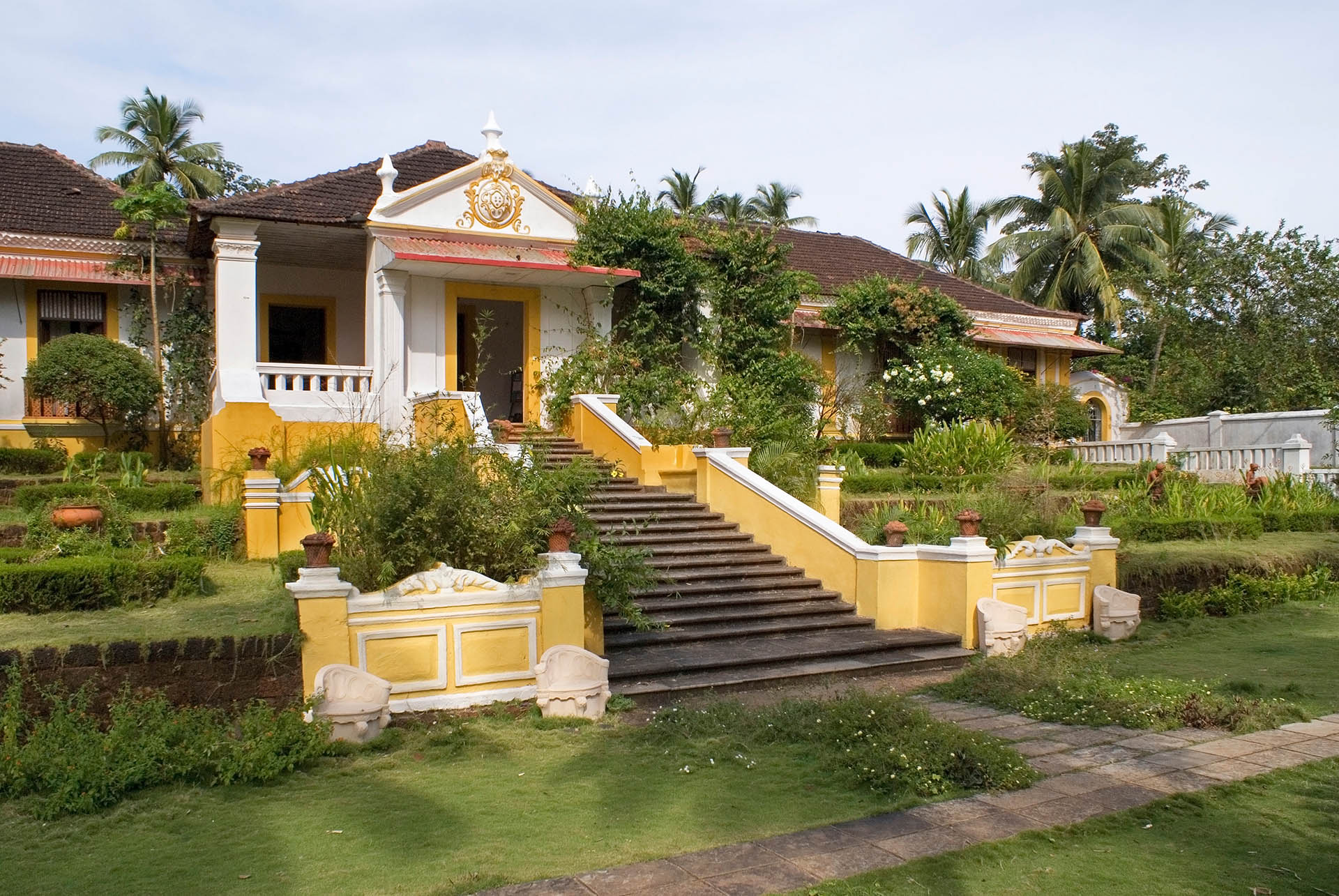
A superb colonial-era palacio stands at QUEPEM, half an hour’s drive southeast of Margao on the fringes of the state’s iron-ore belt. In 1787, a high-ranking member of the Portuguese clergy, Father José Paulo de Almeida, built a country house in the town. Known as the Palacio do Deão it grew to become one of the most grandiloquent in the colony, later served as a retreat for the colony’s Viceroys. The palacio was recently restored to its former glory by a Goan couple who scoured libraries in Lisbon for original plans of the building. What you see today is thus a faithful approximation of how the house would have looked in José Paulo’s day. The engaging guided tour lasts around half an hour, winding up on the lovely rear terrace overlooking the river where, by prior arrangement, you can enjoy a copious Indo-Portuguese lunch (Rs450) – an experience not be missed.
-
Colva
Colva
A hot-season retreat for Margao’s moneyed middle classes since long before Independence, COLVA is the oldest and largest – but least appealing – of south Goa’s resorts. Its outlying waddos are pleasant enough, dotted with colonial-style villas and ramshackle fishing huts, but the beachfront is dismal: a lacklustre collection of concrete hotels, souvenir stalls and fly-blown snack bars strewn around a bleak central roundabout. The atmosphere is not improved by heaps of rubbish dumped in a rank-smelling ditch that runs behind the beach, nor by the stench of drying fish wafting from the nearby village. Benaulim, only a five-minute drive further south, has a far better choice of accommodation and range of facilities, and is altogether more salubrious.
-
Benaulim
Benaulim
The predominantly Catholic fishing village of BENAULIM lies in the dead centre of Colva beach, scattered around the coconut groves and paddy fields, 7km west of Margao. Two decades ago, the settlement had barely made it onto the backpackers’ map. Nowadays, though, affluent holiday-makers from Metropolitan India come here in droves, staying in the huge resort and time-share complexes mushrooming on the outskirts, while long-staying, heavy-drinking Brit pensioners and thirty-something European couples taking time out of trips around the Subcontinent make up the bulk of the foreign contingent.
Benaulim’s rising popularity has certainly dented the village’s old-world charm, but time your visit well (avoiding Diwali and the Christmas peak season), and it is still hard to beat as a place to unwind. The seafood is superb, accommodation and motorbikes cheaper than anywhere else in the state, and the beach breathtaking, particularly around sunset, when its brilliant white sand and churning surf reflect the changing colours to magical effect.
Shelving away almost to Cabo da Rama on the horizon, the beach is also lined with Goa’s largest, and most colourfully decorated, fleet of wooden outriggers, and these provide welcome shade during the heat of the day. Hawkers, itinerant masseurs and fruit wallahs appear at annoyingly short intervals, but you can usually escape them by renting a bike and pedalling south on the hard tidal sand.
Conventional sights are thin on the ground along this stretch of coast, though one exception stands out on the eastern fringes of Benaulim: a splendid new ethnographic museum, Goa Chitra, which looks likely to establish itself as one of Goa’s foremost cultural attractions. Set against a backdrop of a working organic farm, the exhibition comprises a vast array of antique agricultural tools and artefacts, ranging from giant cooking pots and ecclesiastical robes to tubas and sugarcane presses. The idea is to promote appreciation of the region’s traditional agrarian lifestyle – a world of traditional knowledge and skills fast disappearing today. To get to Goa Chitra by bike or motorcycle, head east from Maria Hall crossroads towards Margao, and take the first turning on your left at a fork after 1.5km. When you reach the T-junction ahead, turn sharply right; the museum lies another 500m on your right.
-
Agonda
Agonda
AGONDA, 10km northwest of Chaudi, comes as a pleasant surprise after the chaos reigning elsewhere in Goa. Accommodation in this predominantly Catholic fishing village is in small-scale, family-run guesthouses and hut camps, the restaurant scene is relatively unsophisticated, and the clientele easygoing and health-conscious. Granted, you don’t get a dreamy brake of palm trees as a backdrop, but since the Boxing Day Tsunami the beach seems to have lost its menacing undertow and the sand is as clean as any in the state. Moreover, the surrounding hills and forest are exquisite.
The smart money says Agonda could all too soon go the way of Palolem (several large hut-camp owners have recently purchased leases on land here in anticipation of a mass exodus) but for the time being the village deserves to be high on the hit list of anyone seeking somewhere quiet and wholesome, with enough amenities for a relaxing holiday, but still plenty of local atmosphere.
-
Palolem
Palolem
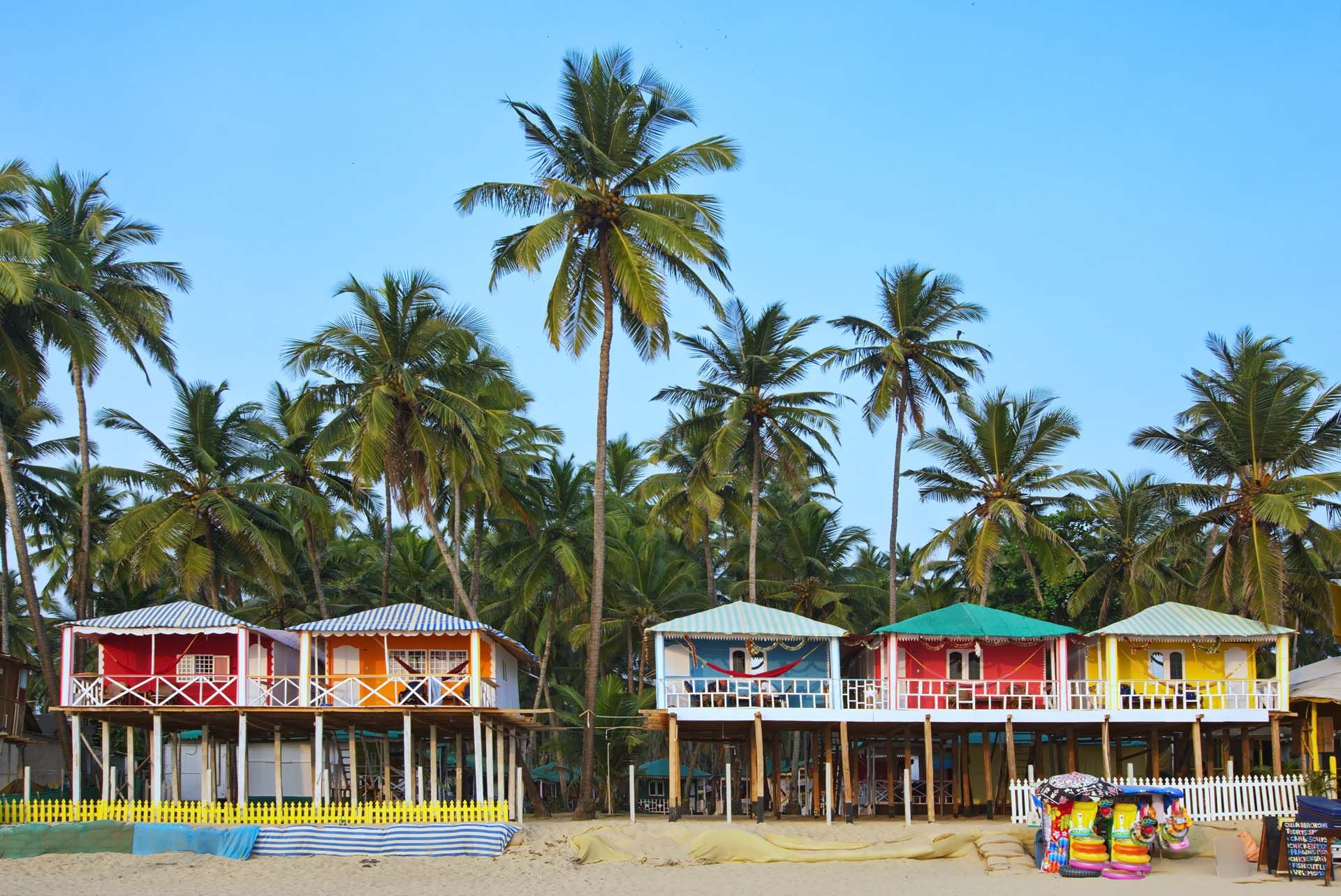
Nowhere else in peninsular India conforms so closely to the archetypal image of a paradise beach as PALOLEM, 35km south of Margao. Lined with a swaying curtain of coconut palms, the bay forms a perfect curve of golden sand, arcing north from a giant pile of boulders to a spur of the Sahyadri Hills, which tapers into the sea draped in thick forest. Palolem, however, has become something of a paradise lost over the past decade. It’s now Goa’s most popular resort, deluged from late-November by legions of long-staying tourists, and bus loads of day-trippers from Karnataka and beyond. Visitor numbers become positively overwhelming in peak season, when literally thousands of people spill across a beach backed by an unbroken line of shacks and Thai-style huts camps.
Basically, Palolem in full swing is the kind of place you’ll either love at first sight, or want to get away from as quickly as possible. If you’re in the latter category, try smaller, less frequented Patnem beach, a short walk south around the headland, where the shack scene is more subdued and the sands marginally emptier.
-
South of Palolem: Colom, Patnem and Rajbag
Once across the creek and boulder-covered spur bounding the south end of Palolem beach, you arrive at COLOM, a largely Hindu fishing village scattered around a series of rocky coves. Dozens of long-stay rooms, leaf huts and houses are tucked away under the palm groves and on the picturesque headland running seawards. This is the best place in the village to start an accommodation hunt – the lads will know of any vacant places; but be warned that most of the rooms here are very basic indeed.
A string of hut camps and shacks line the next beach south, PATNEM. The beach, curving for roughly a kilometre to a steep bluff, is broad, with little shade, and shelves quite steeply at certain phases of the tide, though the undertow rarely gets dangerously strong. On the headland dividing Patnem from Colom, the Harmonic Healing & Eco Retreat Centre is the place to come if you need to sort out your body and soul. Wrapped in greenery with panoramic views of the beach, the centre hosts daily yoga, Pilates and Thai massage classes, as well as lessons in Bollywood dance and classical Indian singing.
At low tide, you can walk around the bottom of the steep-sided headland dividing Patnem from neighbouring RAJBAG, another kilometre-long sweep of white sand. Sadly, its remote feel has been entirely submerged by the massive five-star recently erected on the land behind it – much to the annoyance of the locals, who campaigned for four years to stop the project.
It’s possible to press on even further south from Rajbag, by crossing the Talpona River via a hand-paddled ferry, which usually has to be summoned from the far bank (fix a return price in advance). Once across, a short walk brings you to Talpona Beach, backed by low dunes and a line of straggly palms. From here, you can cross the headland at the end of the beach to reach Galjibag, a remote white-sand bay that’s a protected nesting site for Olive Ridley marine turtles. A strong undertow means swimming isn’t safe here.
-
Cotigao Wildlife Sanctuary
The Cotigao Wildlife Sanctuary, 10km southeast of Chaudi, was established in 1969 to protect a remote and vulnerable area of forest lining the Goa–Karnataka border. Best visited between October and March, Cotigao is a peaceful and scenic park that makes a pleasant day-trip from Palolem, 12km northwest. Encompassing 86 square kilometres of mixed deciduous woodland, the reserve is certain to inspire tree lovers, but less likely to yield many wildlife sightings: its tigers and leopards were hunted out long ago, while the gazelles, sloth bears, porcupines, panthers and hyenas that allegedly lurk in the woods rarely appear. You do, however, stand a good chance of spotting at least two species of monkey, a couple of wild boar and the odd gaur (the primeval-looking Indian bison), as well as plenty of exotic birdlife. Any of the buses running south on the NH-17 to Karwar via Chaudi will drop you within 2km of the gates. However, to explore the inner reaches of the sanctuary, you really need your own transport. The wardens at the reserve’s small Interpretative Centre at the gates, where you have to pay your entry fees will show you how to get to a 25-metre-high treetop watchtower, overlooking a waterhole that attracts a handful of animals around dawn and dusk. You can also stay here at a rather unprepossessing little room, in the compound behind the main reserve gates. Food and drink may be available by prior arrangement, and there’s a shop at the nearest village, 2km inside the park.