Explore The National Parks and Mombasa Highway
This area covers the well-travelled route from Nairobi to Mombasa and a number of detours off it, along with the country’s most visited game parks: Maasai Mara, Amboseli, Meru, Chyulu Hills, Tsavo East and Tsavo West, and a trio of reserves in the north – Samburu, Buffalo Springs and Shaba. The Mombasa highway is Kenya’s most important thoroughfare, the subject for many years of a massive resurfacing project, which was more or less completed in 2009. With scenic interest marginal for much of the journey, the temptation is to head straight for the coast, stopping only at the Amboseli or Tsavo national parks. But there are some rewarding diversions off the highway, which are not greatly explored: east into Kamba country and the towns of Machakos, Kitui and Mwingi, or south towards the base of Kilimanjaro and the Taita Hills.
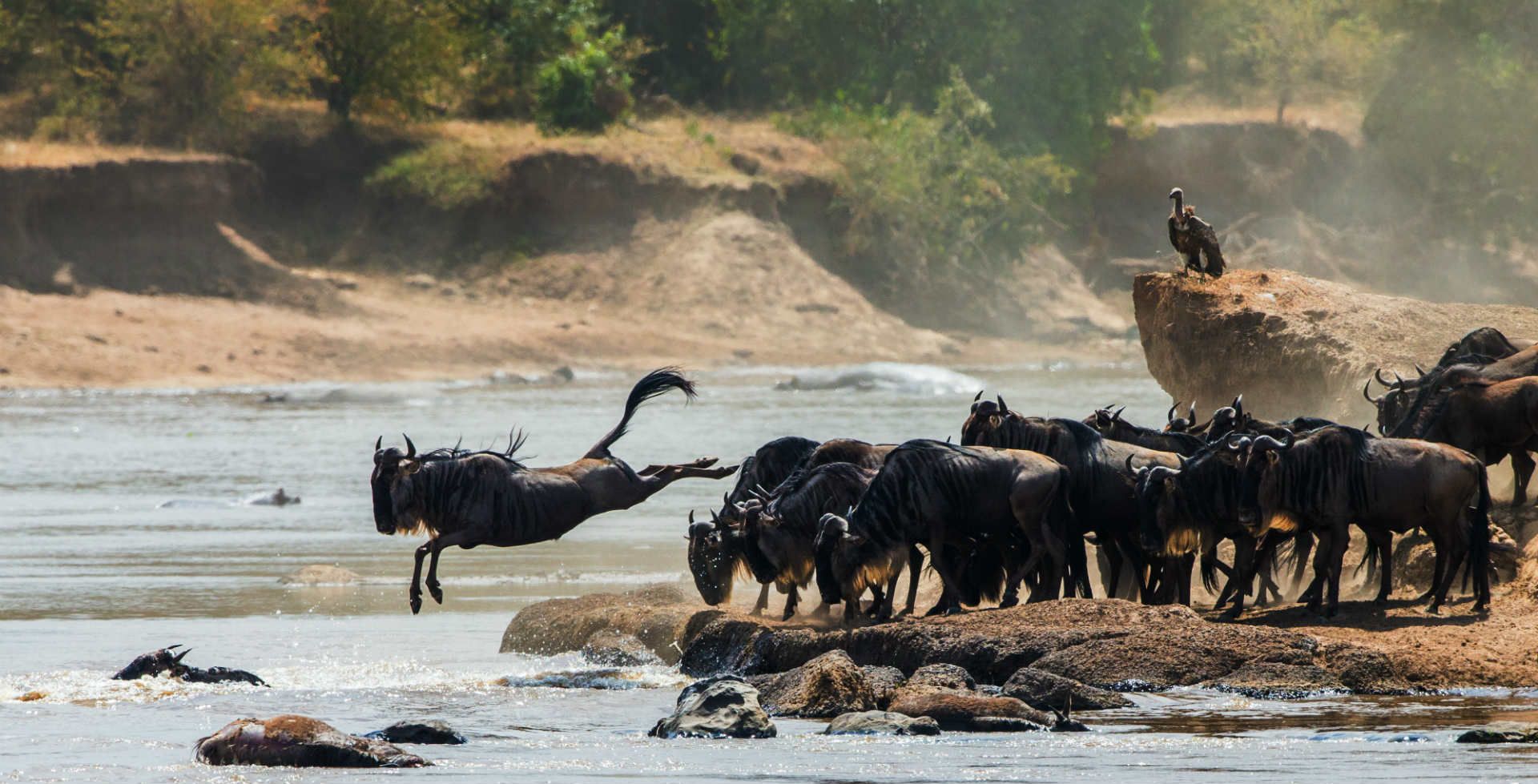
Together with the coast, the game parks in this chapter are the most visited parts of Kenya, and the country’s archetypal image. This is not to take anything away from their appeal, for visiting any of them is an exceptional experience. In the 24,000 square kilometres covered by the nine parks, animals hold sway. Their seasonal cycles and movements, most spectacularly in the Maasai Mara’s wildebeest migration, are the dominant plots in the natural drama going on all around. Seeing the wildlife isn’t difficult, but it does require some patience and an element of luck that makes it exciting and addictive.
It’s likely that you will either already be booked on a safari, or you’ll book one once in Kenya, either from the coast or from Nairobi. Popular alternatives are to rent a vehicle, with or without a driver, or, if you’re alone or there are just two of you, and especially if you’re on a limited budget, to take a no-frills camping safari. There are details on the ins and outs of booking safaris in Basics, and plenty of operators listed in Nairobi and Mombasa.
Read More-
Visiting the main parks
The first realization of where you are in Kenya’s big parks – among uncaptured, and for the most part unfenced, wild animals – can be truly arresting. It may take you a day or two to adjust, as your normal, human-centric view of the world is re-balanced towards an environment in which big creatures hunt, die, mate, feed and enjoy themselves all around you in a wilderness landscape not much changed in centuries. Which parks you choose to visit can seem at first like a pin-in-the-map decision: any of them can provide a store of amazing sight and sound impressions.
Amboseli, Tsavo West and Tsavo East, all in southern Kenya, are the three most accessible parks, with ever-busy game lodges, well-worn trails, large numbers of tourists and big herds of elephant. Amboseli, with its picture-postcard backdrop of Mount Kilimanjaro and guaranteed elephants, is an instant draw, but the flat landscape and lack of tree cover means you may be sharing the stunning vistas with dozens of very noticeable safari vehicles. Tsavo East, in contrast, is so huge you can usually escape company completely, although its sheer size makes the same easy for the animals, too. Tsavo West is also huge, but better watered, allowing higher concentrations of wildlife in a varied landscape that includes hills, woodland springs and lava flows in the scenery changes. On the other hand, the bush and woodland landscape can make animal-viewing harder. The little-visited but highly recommended Chyulu Hills National Park, to the northeast of Amboseli, has spectacular walking country, two magnificent luxury lodges and a superb new self-catering lodge.
Maasai Mara has the most fabled reputation of Kenya’s parks, with horizons of wildlife on every side in a rich, rolling landscape of grasslands and wooded streams. Although it is somewhat isolated in the southwest, it is well worth the effort and cost of getting there, especially if you can arrange your visit during the yearly wildebeest migration. This takes place over an eight- to ten-week period, roughly between early July and early November, and is usually at its most spectacular at the end of August.
North of Mount Kenya, on the fringes of Kenya’s desert region, the adjoining national reserves of Samburu and Buffalo Springs, and, just to the east, Shaba National Reserve share the bounty of the Ewaso Nyiro River system. These reserves have a number of animal varieties not found in the southern parks, including northern races and species of giraffe, zebra, various antelope and ostrich. Each of the reserves is small, even compared with Amboseli, which lends an impression of great concentrations of animals and birds, especially in the dry season when water sources are magnets for the wildlife.
Over to the east of Mount Kenya, the Kenya Wildlife Service’s rescue and relaunch of Meru National Park, which in the 1990s had fallen into the hands of bandits and poachers, has been an impressive piece of work. Verdant Meru is one of the country’s most beautiful parks, and still relatively unvisited, despite having, among its few places to stay, some of the very best options in the country – at both the luxury and budget ends of the spectrum – and nowadays some of the best wildlife-viewing.