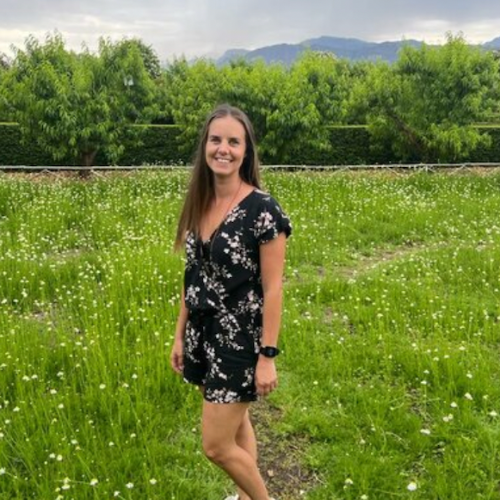
Mount Kenya’s lush, green foothills are a beautiful place to go horseriding. A good option for a guided horseback tour is German family-run Sandai, 11km northeast of Mweiga (0733 734619), a charming and relaxing rural homestay, with comfortable and very attractive rooms. Besides horseriding, activities include day hikes to the Aberdares, overnight excursions, painting and yoga. The five self-catering cottages are also beautifully furnished, with fireplaces and kitchens. To get here from Mweiga, head north for 4.2km from the town centre – note the white tyre in the earth on the east side of the road, marked “Sandai 7km” (beneath a sign announcing “St Joseph Mahiga Secondary School”). Follow this for 5.3km, turn left and after a further 600m right onto a road marked by a white tyre planted in the earth, marked “Sandai 7km”.
Kenya’s highland forests and moors
Kenya’s main highland forests are on Mounts Kenya, Elgon and Marsabit, on the Aberdare range and on the Mau Escarpment. The characteristic natural landscape in the highlands is patches of evergreen trees separated by vast meadows of grasses – often wire grass and Kikuyu grass. The true highland forest, typically found only above 1500m, contains different species of trees from lowland forest, and does not normally grow as tall or dense. Typical species include camphor, Juniperus procera (the East African “cedar”) and Podocarpus. The better-developed forests are found on the wetter, western slopes of the highlands. Above the forest line, at altitudes of 2500m and higher, you get stands of giant bamboo, while along the lower, drier edges of the highlands, the stands of trees tend to be interspersed with fields of tall grass, where you commonly also find various species of olive.
The Kikuyu
The ancestors of the Kikuyu migrated to the Central Highlands between the sixteenth and eighteenth centuries, from northeast of Mount Kenya. Stories describe how they found various hunter-gatherer peoples already in the region (the Gumba on the plains and the Athi in the forests), and a great deal of intermarriage, trade and adoption took place. The newcomers cleared the forests and planted crops, giving the hunters gifts of livestock, honey or wives in return for using the land.
Likewise, there was trade and intermarriage between the Kikuyu and the Maasai, both peoples placing high value on cattle ownership, with the Maasai depending entirely on livestock. During bad droughts, Maasai would raid Kikuyu herds, with retaliation at a later date being almost inevitable. But such intertribal warfare often had long-term benefits, as ancient debts were forever being renegotiated and paid off by both sides, thus sustaining the relationship. Married Kikuyu women enjoyed a special immunity that enabled them to organize trading expeditions deep into Maasai-land, often with the help of a hinga, a middleman, to oil the wheels.
Like the Maasai, the Kikuyu advanced in status as they grew older, through named age-sets and rituals still important today. For Kikuyu boys, circumcision marks the important transition into adulthood (female circumcision, or clitoridectomy, is illegal and rarely performed today). In the past, boys would grow their hair and dye it with ochre in the style of Maasai warriors (in fact, the Maasai got their ochre from the Kikuyu, so it may really have been the other way around). They also wore glass beads around their necks, metal rings on their legs and arms, and stretched their ear lobes with earplugs. Women wore a similar collection of ornaments and, between initiation and marriage, a headband of beads and discs, still worn today by most Maasai women.
Traditionally, the Kikuyu had no centralized authority. The elders of a district would meet as a council and disputes or important decisions would be dealt with in public, with a party to follow. After their deaths, elders – now known as ancestors – continued to be respected and consulted. Christianity has altered beliefs in the last few decades, though many churchgoers still believe strongly in an ancestor world where the dead have powers over their living descendants. The Kikuyu traditionally believed that the most likely abode of God (Ngai), or at least his frequent resting place, was Mount Kenya, which they called Kirinyaga (Place of Brightness). Accordingly, they used to build their houses with the door always looking out towards the mountain, hence the title of Jomo Kenyatta’s book, Facing Mount Kenya.
Today, the Kikuyu are at the forefront of Kenyan development and, despite entrenched nepotism, are accorded grudging respect as successful business people, skilled media operators and formidable politicians. There is considerable political rivalry between the Kiambu Kikuyu of the tea- and coffee-growing district north of Nairobi and the Nyeri Kikuyu, based in the fertile area of Othaya who rely on a more mixed economy.
The GEMA (Gikuyu, Embu and Meru Association), created in 1971 to further Kikuyu interests, at first concerned itself primarily with countering Daniel Arap Moi’s ascent to the presidency, and although it was banned in 1980, it is believed to continue to operate clandestinely throughout Kenya.
The emergence in Kikuyuland in the early 2000s of the secret and violent Mungiki cult, somewhat modelled after the colonial era’s Mau Mau independence movement but based primarily around extortion and gangster operations rather than emancipation, brought terror to slum districts in parts of Central Kenya. In a twist of jaw-dropping chutzpah, its leader escaped justice, declaring himself a born-again Christian. He is now wooed by mainstream politicians, while Mungiki has become a deeply corrupting force within the political process.
Miraa
Throughout Kenya, and especially in the Central Highlands and on the coast, you’ll often see people selling and chewing what looks like a bunch of twigs wrapped in a banana leaf. This is miraa, more commonly known abroad by its Somali name qat, a natural stimulant that is particularly popular among Somalis, Somali Kenyans and Yemenis. The shrub (Catha edulis) grows in the hills around Meru (the world centre for its production), and the red-green young bark from the shrub’s new shoots is washed, stripped with the teeth and chewed, with the bitter result being something of an acquired taste (it’s sometimes taken with bubble gum to sweeten it). Miraa contains an alkaloid called cathinone, a distant relative of amphetamine, with similar effects, though you have to chew it for some time before you’ll feel them. When they do kick in, they include a feeling of alertness, ease of conversation and loss of appetite. Long-term daily use can lead to addiction. It’s not always looked upon favourably, with signs prohibiting the chewing of it in many hotels and bars.
Miraa comes in bundles of a hundred sticks called “kilos” (not a reference to their weight) and various qualities, from long, twiggy kangeta, which is the ordinary, bog-standard version, to short, fat gisa kolombo, which is the strongest. As it loses its potency within 48 hours of picking, it’s wrapped in banana leaves and transported at speed. Street stalls selling it often display the banana leaves to show that they have it, and the best place to buy miraa in many towns is where the express matatus arrive from Meru. The use of miraa by bus, truck and matatu drivers goes a long way towards explaining why they have so many accidents. There are no legal restrictions on the use of miraa in Kenya, although imams have issued a fatwa (legal judgement) condemning it as an intoxicant, like alcohol, which means that it is forbidden to true believers. In fact, in most countries (but not the UK), miraa is a controlled narcotic, the possession of which is a criminal offence.